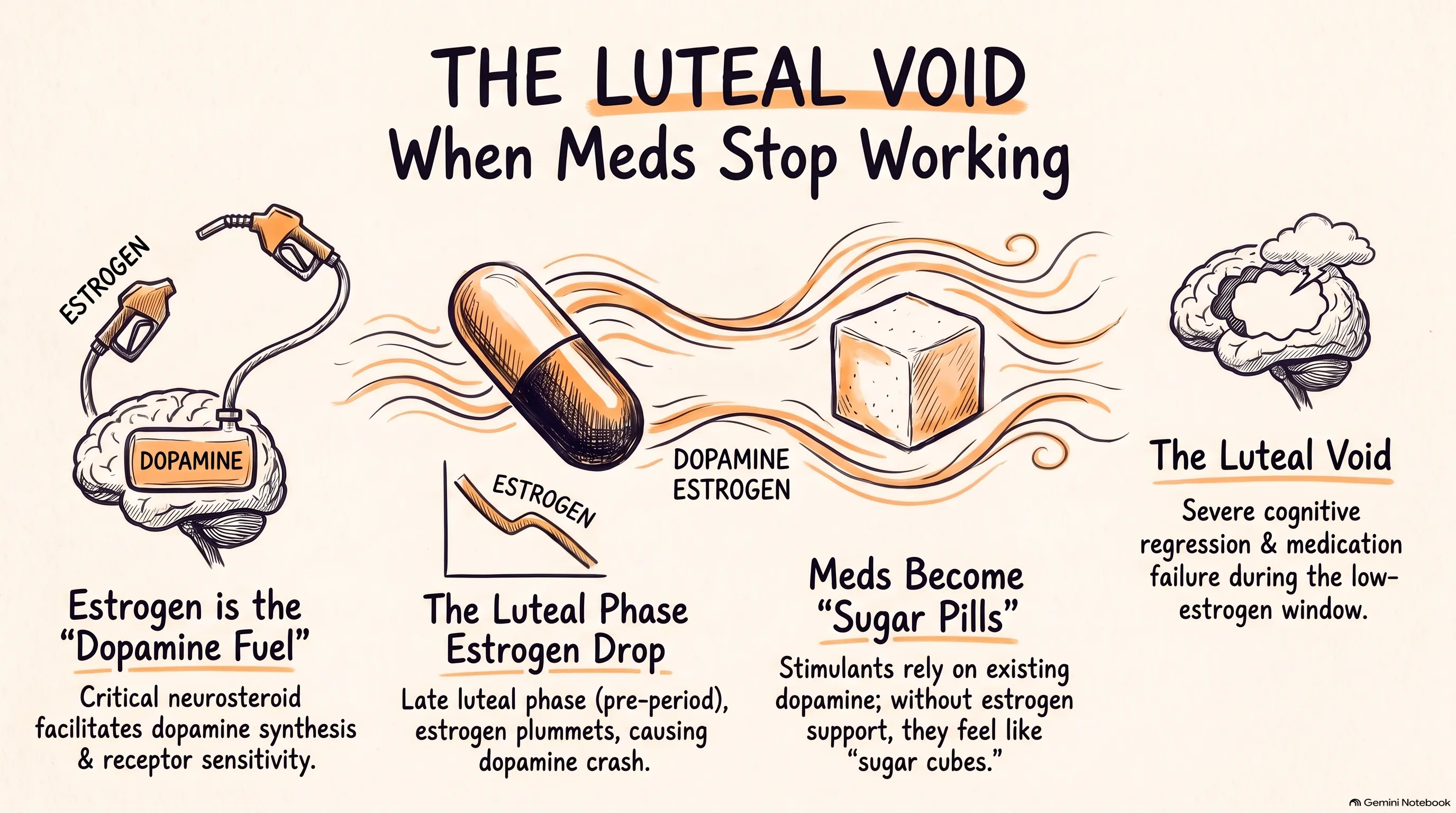
Every month, millions of women taking stimulant medications for ADHD experience a bewildering executive crash. For three weeks, medications like Vyvanse, Adderall, or Concerta provide focus, working memory stability, and emotional regulation. Then, like clockwork, seven to ten days before menstruation—during the late luteal phase—the medication suddenly seems to lose all potency. Patients frequently describe their daily dose as feeling like a "sugar pill."
During this monthly crash, core ADHD symptoms return with acute intensity: crippling brain fog, task initiation paralysis, emotional lability, and profound physical fatigue. For those with comorbid Premenstrual Dysphoric Disorder (PMDD), the executive drop is compounded by severe mood swings, sensory overload, and panic.
Despite how universal this phenomenon is in neurodivergent communities, a massive clinical void persists. Most prescribers never warn patients that female endocrine cycles dictate stimulant bioavailability, leaving women feeling broken, ashamed, or terrified that they have built permanent drug tolerance.
You are not building tolerance. Stimulants require circulating estrogen to synthesize dopamine. When estrogen crashes during the late luteal phase, stimulants have no dopamine substrate to amplify.
The Neuro-Endocrine Axis: Why Dopamine Requires Estrogen
The failure of stimulant medications during the luteal phase lies in the neuro-endocrine link between estrogen and central dopamine signaling. Estrogen functions as an essential neurosteroid that directly modulates the brain’s dopaminergic system:
- Enhances Dopamine Synthesis: Estrogen stimulates tyrosine hydroxylase, the primary enzyme responsible for manufacturing dopamine.
- Sensitizes Receptors: It upregulates dopamine receptor density in the prefrontal cortex, enhancing signal reception.
- Transporter Regulation: Estrogen modulates dopamine transporter (DAT) availability, keeping dopamine active in the synapse longer.
During the follicular phase, rising estrogen optimizes dopamine production, allowing stimulants to effectively clear executive hurdles. However, in the late luteal phase, estrogen plummets while progesterone surges. Progesterone decreases dopamine receptor availability and frequently exerts a paradoxical sedating, dysphoric effect on neurodivergent brains.
Because stimulants work by optimizing existing neurotransmitter availability, they cannot function when baseline dopamine production drops. Without adequate estrogen to fuel dopamine synthesis, stimulants arrive at receptor sites with nothing to amplify.
The Three Hidden Absorption Saboteurs
Beyond monthly hormonal fluctuations, three physiological factors frequently sabotage stimulant absorption, mimicking medication failure:
1. Gastric Acidity and Ascorbic Acid (Vitamin C)
Consuming oral amphetamines alongside orange juice, vitamin C supplements, citric acid, or acidic coffee within 60 to 90 minutes of dosing lowers gastrointestinal pH and dramatically speeds renal excretion. Ascorbic acid accelerates the urinary flushing of amphetamines before the gastrointestinal tract can absorb them.
2. Suboptimal Serum Ferritin
Iron is a required cofactor for tyrosine hydroxylase. Clinical research demonstrates that if serum ferritin drops below 50 to 70 ng/mL—even in the absence of clinical anemia—the brain cannot physically synthesize dopamine. Taking stimulants with depleted iron stores is like stepping on the gas pedal of a car with an empty fuel tank.
3. Mast Cell Activation (MCAS) and Histamine Surges
Progesterone dominance and falling estrogen trigger mast cell degranulation. In neurodivergent individuals with comorbid Mast Cell Activation Syndrome (MCAS) or sluggish DAO enzymes, excess histamine crosses the blood-brain barrier, triggering neuroinflammation, severe brain fog, and dysautonomia that completely overwhelm cognitive reserves.
The 10-Year Acceleration: ADHD and Early Perimenopause
The intersection of hormones and neurodivergence reaches a crisis point during midlife. Recent epidemiological research reveals that perimenopause begins up to 10 years earlier in women with ADHD—frequently emerging between ages 35 and 39, compared to ages 45 to 49 in neurotypical peers. Over 54% of women with ADHD report severe, debilitating perimenopausal symptoms.
As baseline estrogen undergoes volatile drops during perimenopause, lifelong coping mechanisms and masking strategies completely collapse. Women who managed high-performing careers for decades suddenly experience terrifying memory lapses and executive burnout. Tragically, medical gaslighting remains pervasive: clinicians routinely dismiss these symptoms as “just depression,” refusing Hormone Replacement Therapy (HRT) or claiming perimenopausal cognitive collapse is unrelated to ADHD.
The 4-Step Zero-Friction Management Protocol
To overcome the luteal void and protect executive function, neurodivergent women and prescribers can implement a targeted, four-step protocol:
- Cyclic Dosing with Prescriber Alignment: Under medical supervision, adjust stimulant dosages during the 7 to 10 days of the luteal phase. This may include adding a 5 to 10 mg short-acting afternoon booster or temporarily increasing the primary dose by 10 to 20 mg.
- Morning Protein Pacing & Acid Avoidance: Consume 20 to 30 grams of protein alongside morning medication to deliver L-tyrosine precursors necessary for dopamine manufacturing. Avoid all citrus juices, Vitamin C supplements, and ascorbic acid within 90 minutes of medication.
- Ferritin and Magnesium Optimization: Replete serum ferritin levels to an optimal target above 50 to 70 ng/mL using iron bisglycinate taken with Vitamin C at bedtime. Supplement with 200 to 400 mg of Magnesium Glycinate in the evening to block NMDA receptor hyperexcitability and prevent stimulant tolerance.
- Transdermal Bioidentical HRT: For women in their mid-30s and beyond, consult a menopause specialist about transdermal 17β-estradiol patches paired with bioidentical micronized progesterone. Transdermal delivery bypasses hepatic first-pass metabolism, stabilizing systemic estrogen and reactivating stimulant effectiveness.
Free Action Guide & Resources
- 📺 Watch the Full Master Video on YouTube: Zero Friction ADHD Channel
- 📄 Download the 1-Page Luteal Void Action Guide (PDF): Gumroad Digital Guide