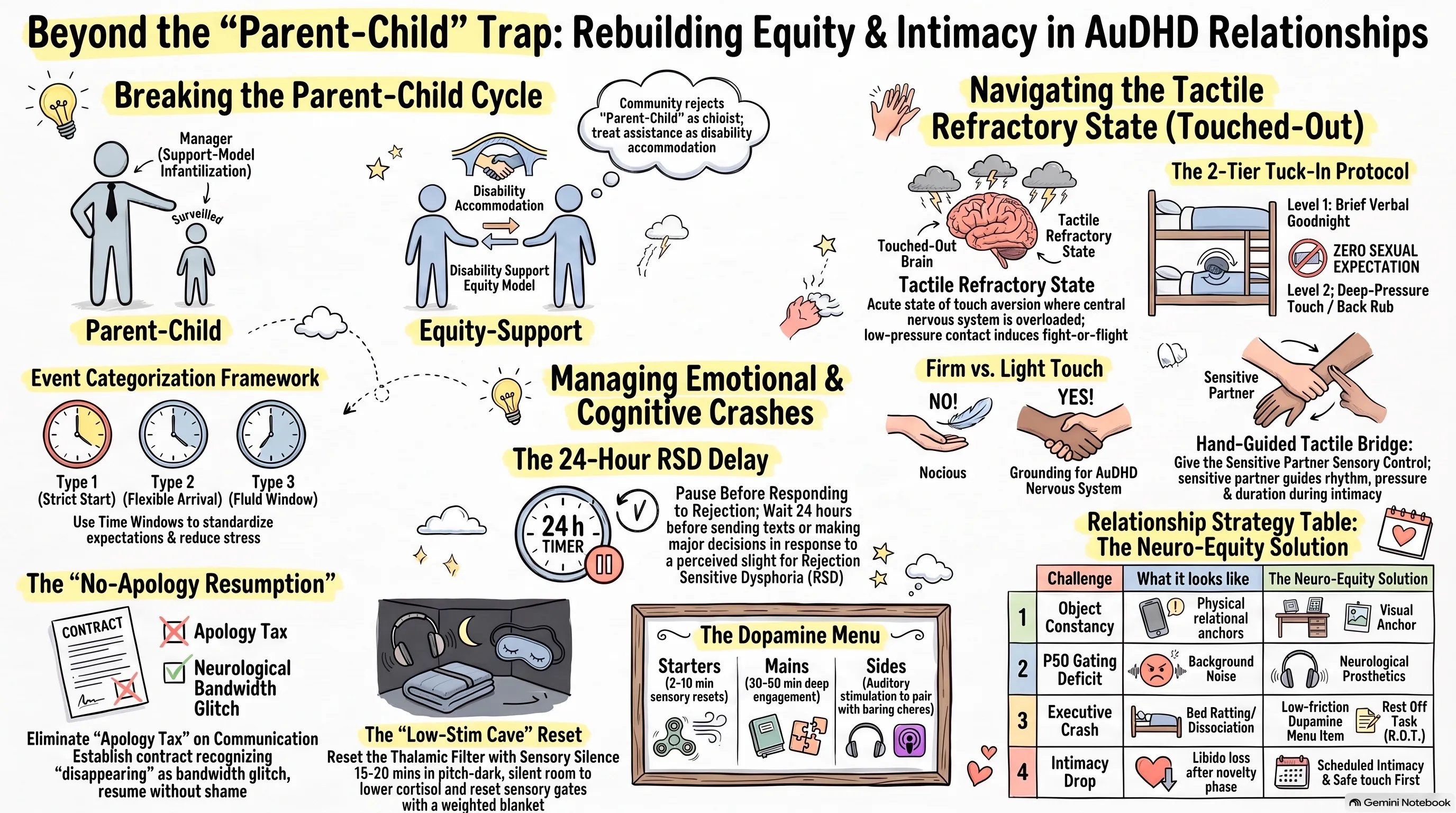
In relationships where one or both partners are neurodivergent (ADHD, Autistic, or AuDHD), an exhausting pattern frequently takes root:
One partner gradually assumes the operational load of tracking appointments, managing laundry, reminding about bills, and monitoring chore completion.
Mainstream couples counseling almost reflexively slaps this dynamic with the label: “The Parent-Child Dynamic.” Relationship bestsellers advise: “The ADHD partner needs to step up and act like a responsible adult, while the non-ADHD partner needs to stop nagging.”
This framing is not only clinically misguided—it is profoundly damaging to neurodivergent dignity.
Executive dysfunction is a genuine neurological disability involving prefrontal dopamine deficiency, working memory impairment, and impaired temporal processing. It is not willful defiance, passive aggression, or arrested adolescent development.
However, when domestic life collapses into managerial surveillance, romantic and sexual desire suffers a fatal blow. The caretaking partner feels overburdened, resentful, and motherly/fatherly; the neurodivergent partner feels infantilized, scrutinized, and constantly ashamed. You cannot maintain passionate romantic polarity with someone you are supervising—or someone who supervises you.
The Tactile Refractory State: Why Gentle Touch Hurts
Alongside operational burnout, neurodivergent couples face an equally confusing physical barrier: the Tactile Refractory State—widely experienced in the community as feeling completely “touched out.”
┌────────────────────────────────────────────────────────┐ │ Full Day of Sensory & Cognitive Masking │ │ (Fluorescent lights, sound, workplace demands) │ └───────────────────────────┬────────────────────────────┘ │ ▼ ┌────────────────────────────────────────────────────────┐ │ Sensory Bandwidth Saturated (Thalamic Filter Depleted) │ └───────────────────────────┬────────────────────────────┘ │ ▼ ┌────────────────────────────────────────────────────────┐ │ Partner Approaches with Light / Unpredictable Touch │ │ (Gentle caress, brush of fingers, surprise kiss) │ └───────────────────────────┬────────────────────────────┘ │ ▼ ┌────────────────────────────────────────────────────────┐ │ Involuntary Autonomic Threat Response │ │ • Skin-crawling sensation │ │ • Sudden flinching / muscular tension │ │ • Intense irritability / fight-or-flight recoil │ └────────────────────────────────────────────────────────┘
When an AuDHD person spends an entire workday masking in noisy, bright, socially demanding environments, their sensory gating mechanisms are exhausted.
When their well-meaning partner approaches with light, unpredictable affection—brushing a neck, stroking an arm—the neurodivergent brain does not register love. Light, delicate touch fires high-frequency superficial tactile afferents, which an overloaded nervous system interprets as a parasite or threat.
The neurodivergent partner flinches or pulls away in visceral discomfort. The non-ADHD partner feels deeply rejected. The neurodivergent partner spirals into Rejection Sensitive Dysphoria (RSD) and guilt.
The Dopamine Libido Drop
Why does this tactile friction rarely happen during the initial dating phase?
During early romantic stages, infatuation triggers massive surges of dopamine, norepinephrine, and phenylethylamine. In the ADHD brain, high dopamine acts as a natural neurological shock absorber, temporarily dampening sensory defensiveness and overriding executive friction.
Once the relationship stabilizes into long-term attachment, dopamine production returns to baseline. Sensory sensitivities re-emerge in full force. Without neurochemical literacy, couples misinterpret this predictable hormonal shift as “falling out of love.”
3 Zero-Friction Protocols to Restore Autonomy and Safety
Healing this dynamic requires removing the human burden of tracking and establishing crystal-clear sensory boundaries.
1. Dethrone the Caregiver via Neutral External Systems
The quickest way to destroy intimacy is having one partner tell the other what needs to be done.
- The Golden Rule: The partner never issues reminders. The system does.
- Transition all shared domestic logistics (groceries, bills, medication routines, maintenance) to a shared visual kanban board or digital calendar with push notifications.
- If a chore is left undone, the frustration is directed at refining the friction point in the system, not at the partner.
2. The 2-Tier Tuck-In Protocol
Bedtime is often the epicenter of miscommunication, where one partner seeks physical closeness while the other is sensory-depleted. The 2-Tier Tuck-In provides a neutral shorthand code:
- Tier 1 Tuck-In: Sensory capacity is at absolute zero. The code means: “I love you deeply, but I cannot tolerate physical skin contact tonight.” Both partners agree: zero touch, zero guilt, zero rejection. Just quiet shared presence and sleep.
- Tier 2 Tuck-In: The nervous system is dysregulated and requires deep proprioceptive grounding. The code means: a firm, heavy, non-sexual 60-second bear hug or being tucked tightly under a weighted blanket.
3. The Hand-Guided Tactile Bridge
During intimate moments, unpredictable touch triggers sensory recoil.
- To eliminate this, the sensory-sensitive partner places their hand directly over the partner’s hand, physically guiding the pressure, speed, and location.
- By actively piloting the contact, the brain predicts the sensory input in advance, completely turning off the defensive startle reflex and allowing authentic pleasure to unfold.
Action Guide & Video Resources
Rebuilding romantic equity takes patience, clear boundaries, and zero-friction systems. Download our printable 1-page guide to discuss these protocols with your partner:
- Download: AuDHD Relationship Reset Guide (PDF)
- Master Video: Watch our full YouTube masterclass: Beyond the “Parent-Child Dynamic”: Rebuilding AuDHD Intimacy and Autonomy.