The Adrenaline Cycle Crisis Mode Is Not Sustainable
Zero Friction ADHD · 2026-08-26
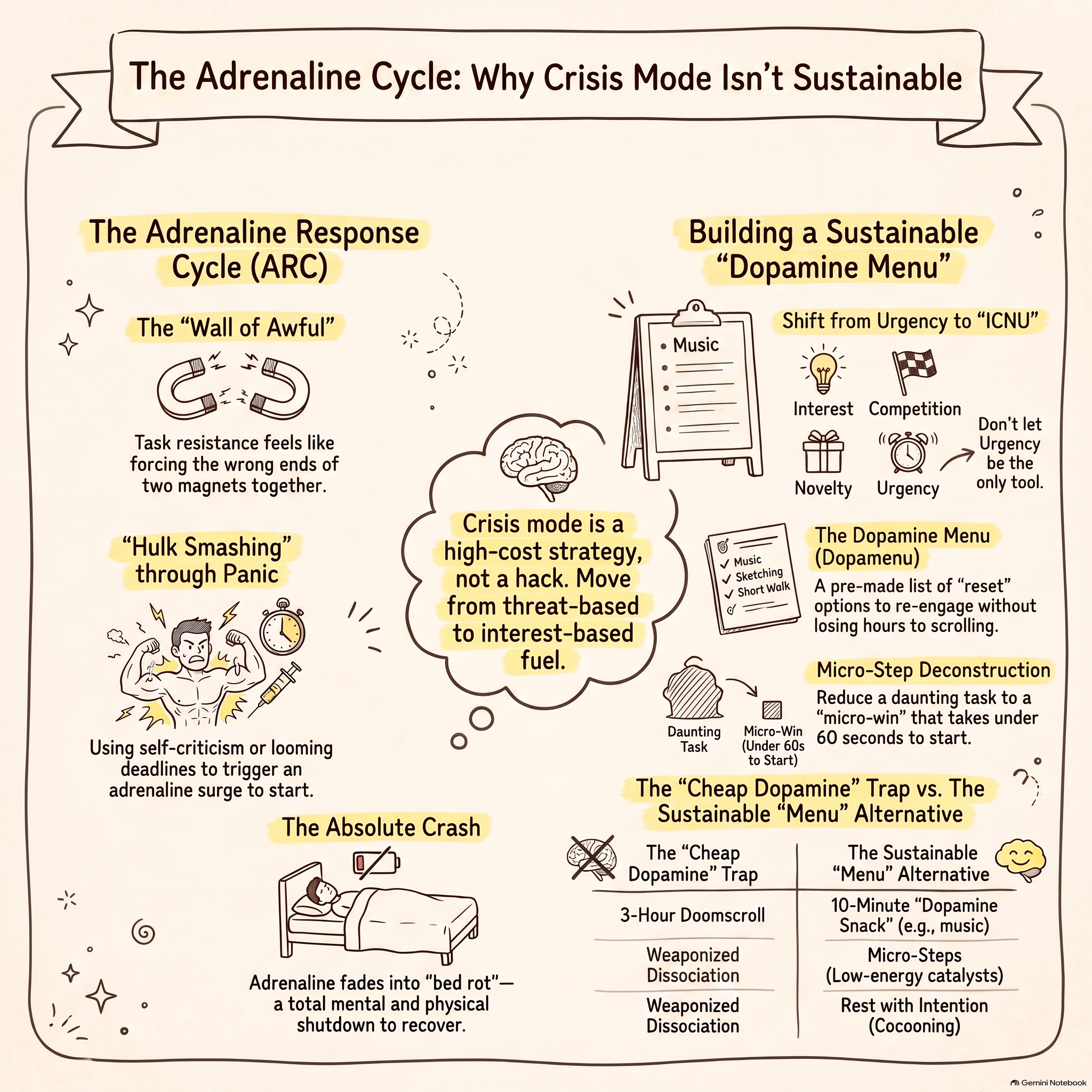
The problem Your tax deadline is tomorrow morning at 9:00 AM, and you have not even opened the folder of receipts. For three weeks, you stared at that folder, feeling a heavy physical block. You wanted to do it, but you felt completely frozen. Now, with only hours left, sheer panic washes over you. Your heart races, and your mind enters a hyper-focused state. You stay up all night, fueled by fear, and miraculously finish the taxes with minutes to spare. You collapse into bed, telling yourself, "Panic is my only motivator." But over the next three days, you pay a terrible price. Your brain is wrapped in a thick fog, and you cannot answer a single email or wash a cup. You are caught in the **adrenaline response cycle**—an unsustainable pattern of using crisis mode as fuel to escape task paralysis. ## Why it happens This cycle is a biological workaround developed by your **ADHD brain** to bypass executive dysfunction. Your prefrontal cortex relies on a steady supply of **dopamine** to function. Because you have an **interest-based nervous system**, your brain does not naturally release this starting chemical for routine or boring chores. When a task lacks immediate novelty, interest, or challenge, your prefrontal cortex runs low on **cellular energy (ATP)**. Your brain's threat detector, the **amygdala**, becomes highly reactive. It perceives the mental friction of starting a boring task as an active threat, triggering a physical **freeze response** that locks you in task paralysis. To break this freeze, your brain relies on an emergency battery: **adrenaline and cortisol**. When a deadline is close, the impending crisis triggers a massive sympathetic nervous system alarm. This surge of stress hormones floods your system, temporarily exciting your prefrontal cortex and forcing you over the **"Wall of Awful."** But adrenaline is meant for short-term survival, not daily productivity. Forcing your cells to run on stress hormones depletes your mitochondria's ability to produce ATP. This leads to profound physical and mental exhaustion, locking you back into task paralysis and continuing the vicious cycle of burnout. ## How to fix it today To retire the adrenaline engine and transition to a sustainable way of working, you must stop relying on panic and start signaling safety to your nervous system. Here is how you can apply a fix today: - **Trigger a 60-second somatic reset:** When task paralysis locks you in place, calm your physical body to signal safety. Try a **physiological sigh**—two quick inhales through your nose followed by one long, slow exhale to activate your parasympathetic response. Alternatively, splash cold water on your face to trigger the mammalian dive reflex and reduce physical anxiety (check with a doctor first if you have health conditions). - **Consult your physical Dopamine Menu:** Instead of starving your brain until it triggers a crisis, feed it healthy, intentional stimulation. Create a physical **Dopamine Menu** in your workspace. When you feel blocked, choose a 2-minute "Starter" like drinking cold fizzy water or listening to a favorite song to raise your dopamine baseline naturally. - **Commit to a 180-second micro-start:** Lower the starting bar by setting a visual timer for three minutes. Commit to working messily for just 180 seconds, with unconditional permission to stop when the timer rings. Overcoming the initial transition friction is often all your brain needs to build momentum. - **Prepare a zero-friction starting point in advance:** Transitioning from rest to work requires immense energy. To make starting tomorrow effortless, prepare your workspace tonight. Open the exact file you need and clear your desk. This removes the morning executive tax, allowing you to glide straight into motion. ## Common mistakes to avoid - **Labeling panic as your "only motivator":** Do not convince yourself that you work best under pressure. While the adrenaline spike gets the job done, using stress as daily fuel keeps your body in a state of high alert, depleting your energy and leading to chronic **executive burnout**. - **Isolating yourself in a quiet room to "force" focus:** Forcing yourself to sit in a quiet room when your brain is under-stimulated only increases internal friction and amygdala reactivity. Instead, use passive stimulants like instrumental lo-fi music or try **body doubling**—working alongside someone else to anchor focus. - **Beating yourself up during the post-adrenaline crash:** Shaming yourself for feeling exhausted after a crisis increases systemic stress. Treat your fatigue as real biological data—your mitochondria are simply rebuilding cellular energy. Show yourself compassion and allow your body to recover with analog, low-stimulation rest. ## Takeaway The adrenaline cycle is not a sign of laziness or a lack of discipline; it is an expensive biological workaround of an under-stimulated brain trying to survive task paralysis. Adrenaline is a powerful emergency fuel, but it is meant for escaping predators, not for answering emails. To heal your burnout and build sustainable focus, you must retire the panic engine. By calming your physical body with somatic resets, feeding your brain healthy stimulation from your Dopamine Menu, and preparing your physical environment for a zero-friction start, you work with your biology instead of fighting it. Lower the starting bar, show yourself compassion, and let calm momentum carry you forward.