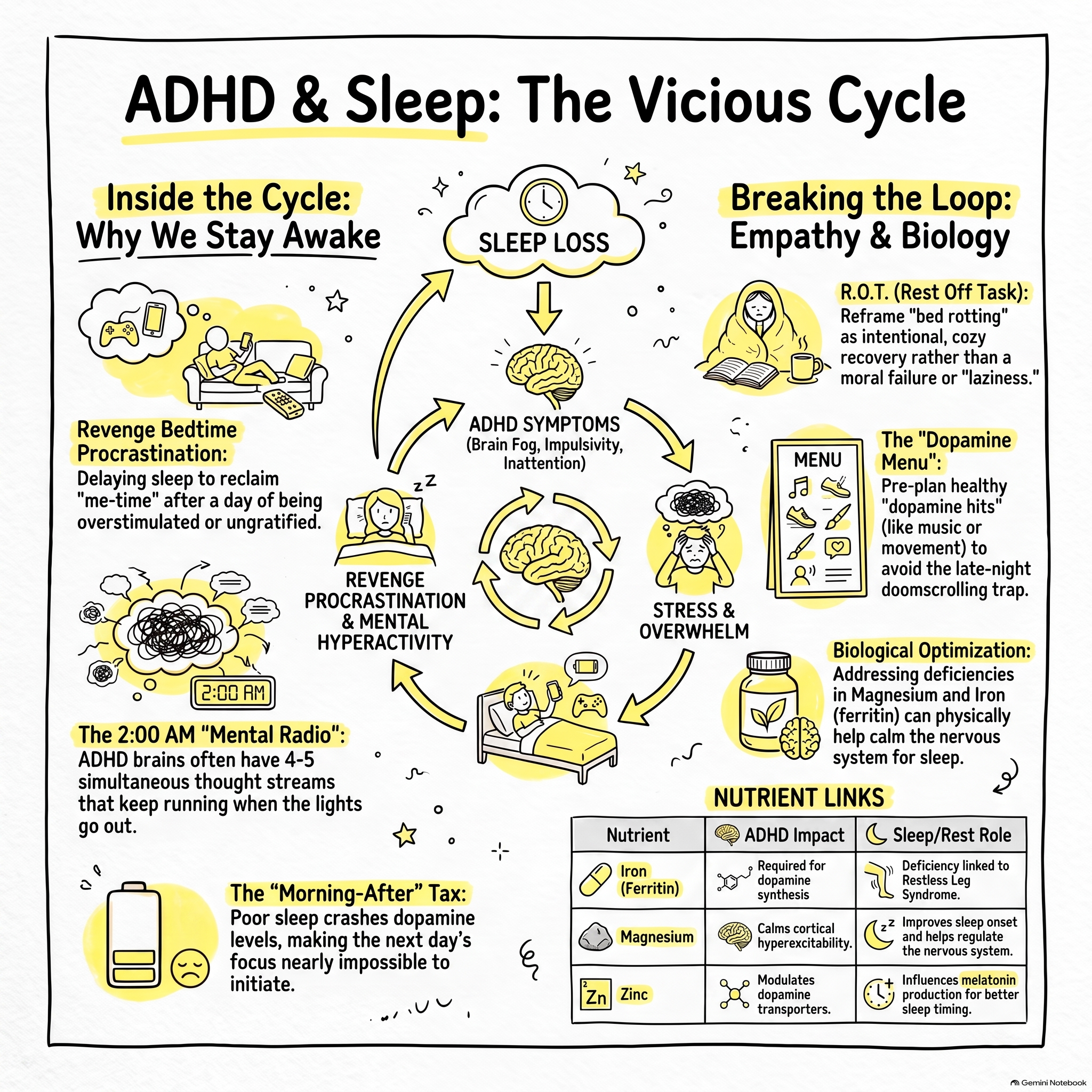
The problem It is 11:30 PM. You know you should close your laptop, put down your phone, and go to sleep. You have a long, demanding day tomorrow, and you are already physically exhausted. Yet, you cannot bring yourself to turn off the screen. This quiet, late-night window is the only time all day when nobody is demanding your attention, making decisions for you, or asking you to complete a chore. It is your precious "me time." So, you scroll. You watch just one more video, read one more article, or research a new hyperfocus topic. Fast forward to 2:30 AM. Your eyes burn, your mind is racing, and a heavy wave of guilt hits your chest. When your alarm rings, you wake up with a dense brain fog. You struggle through a day of task paralysis and executive exhaustion, only to repeat the exact same late-night cycle when the sun goes down. This is the **ADHD sleep cycle**—a frustrating loop where your brain craves rest but actively fights sleep. ## Why it happens This exhausting cycle is not a sign of poor discipline. It is a biological clash driven by your unique **neurodivergent clock**. First, research shows that adults with ADHD frequently experience a biological **circadian phase delay**. While a neurotypical brain naturally releases melatonin—the sleep hormone—around 9:00 or 10:00 PM, an ADHD brain delays this release by up to two hours. Your body is physically programmed to stay awake later. Second, your brain runs on an **interest-based nervous system**. Throughout the day, managing executive dysfunction, masking, and tackling boring tasks completely drains your **cellular energy (ATP)** and depletes your dopamine reserves. By evening, your brain is starved of stimulation. Late-night scrolling provides easy, high-yield digital hits of dopamine. Your brain clings to this cheap stimulation because it is desperate to replenish its chemical fuel. Third, the thought of tomorrow's to-do list triggers anticipation anxiety. Because starting tasks is so difficult for a low-energy brain, your threat-detecting **amygdala** treats the upcoming day as an active threat. Your subconscious uses **revenge bedtime procrastination** to delay going to sleep because sleep is the gateway to tomorrow. Your brain locks you in place to avoid the transition, turning bedtime into a major executive barrier. ## How to fix it today To break the cycle of sleep deprivation, you must stop trying to force your body into a rigid, neurotypical schedule. Instead, work with your biology to ease the transition to rest with these four concrete steps today: - **Create an analog bedtime buffer:** Since your brain is hungry for evening dopamine, feed it healthy, low-stimulation alternatives. Create a night-time **Dopamine Menu**. Replace screens with analog "Mains" like reading a physical book, doing a puzzle, journaling, or stretching in a dimly lit room. Keep your phone physically outside your bedroom. - **Trigger a 60-second somatic reset:** If your mind is racing at bedtime, calm your physical body first. Perform a **physiological sigh**—taking two quick, deep inhales through your nose followed by one long, slow exhale. This breathing pattern instantly activates your parasympathetic nervous system, lowering your heart rate and signaling safety to your reactive amygdala. - **Prepare your morning starting point in advance:** To reduce the sleep-avoidance anxiety triggered by tomorrow's chores, design your morning environment for **zero friction**. Before you begin your bedtime routine, open the exact file you need, clear your desk, or lay out your physical clothes. Removing these tiny morning barriers helps your brain view tomorrow as manageable. - **Commit to a 180-second wind-down start:** When you are frozen on the couch scrolling, the executive tax of brushing your teeth and changing into pajamas feels like climbing a mountain. Bypass this block by committing to a tiny three-minute transition. Tell yourself, "I am only going to stand up and wash my face for three minutes, and then I can return to the couch if I want." Lowering the bar removes the transition friction and lets physical momentum take over. ## Common mistakes to avoid - **Using screens as a way to wind down:** Scrolling through short videos or playing mobile games in bed feels relaxing, but the constant blue light and high-speed stimulation actively suppress melatonin production. This keeps your brain in a state of high alert, leaving you feeling wired but tired. - **Using "Hulk smashing" to force sleep:** Do not berate yourself or try to force your eyes shut through sheer willpower or shame. Self-criticism increases emotional stress and makes your amygdala more reactive, reinforcing the biological freeze response that keeps you awake. - **Striving for a perfect, rigid sleep schedule:** Trying to transition instantly from late nights to a perfect 8-hour, early-bird routine is unsustainable. Introduce gradual, low-friction changes. Moving your bedtime up by just fifteen minutes at a time is far more effective. ## Takeaway Struggling to sleep with ADHD is not a sign of laziness; it is a complex biological reality driven by delayed melatonin release, depleted dopamine, and transition anxiety. Stop shaming yourself for staying up too late. By calming your physical body with somatic resets, replacing screens with analog recovery, and preparing your environment for a zero-friction morning, you work with your biology instead of fighting it. Lower the starting bar, show yourself compassion, and let calm momentum guide you to restorative rest.